Eliminating Warehouse Query Lag as the Root Cause of Stale AI Agent Memory
Real-time change data capture replaces batch delays with event-driven updates for autonomous agents.
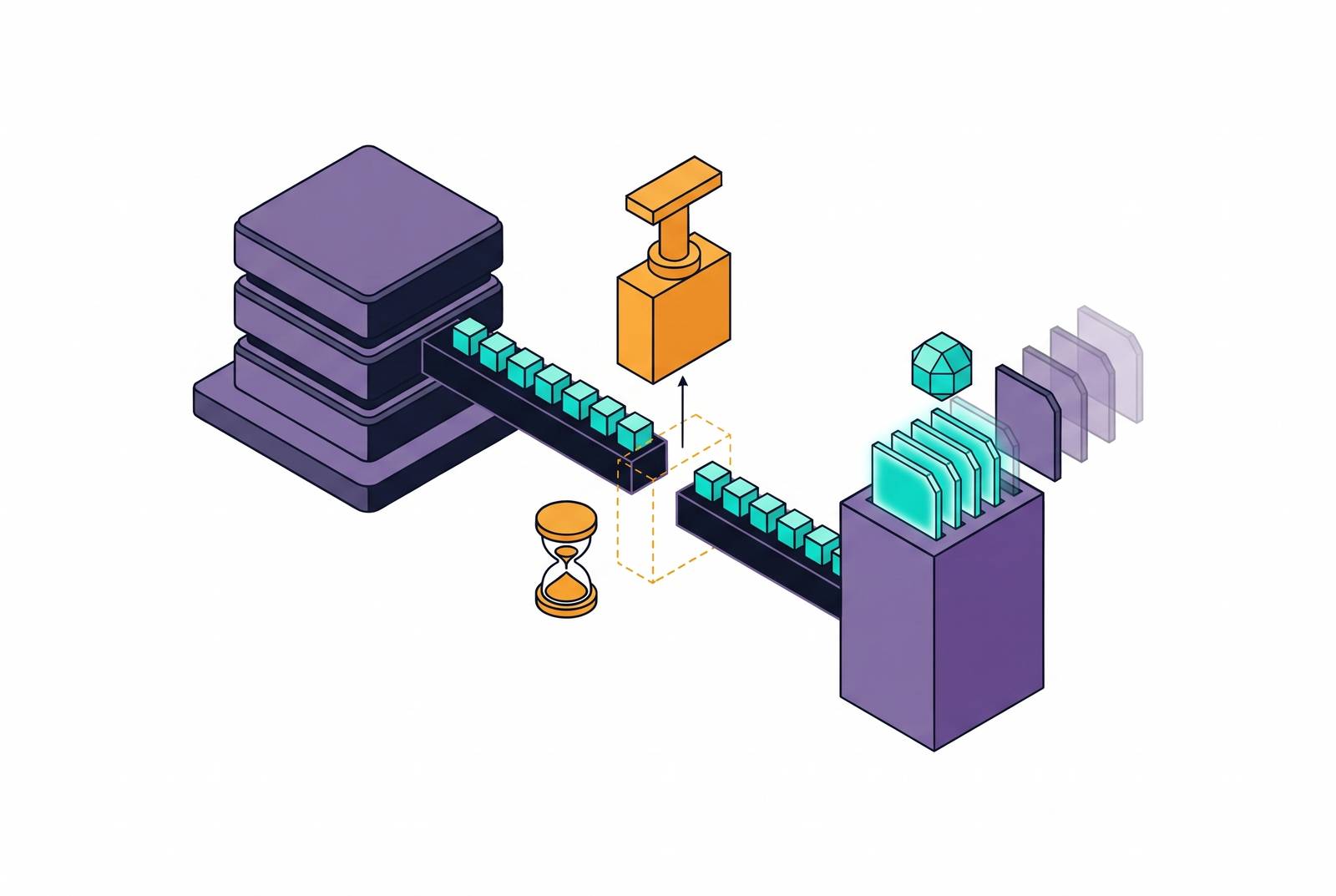
Warehouse query lag makes AI agent memory stale because it puts old operational records in the context window. Real-time CDC replication for AI agent memory and feature stores removes batch delays by sending database changes as they happen, before the next retrieval cycle. Sub-minute replication closes that freshness gap, but query speed and consistency still need their own guarantees.
Why the warehouse became AI memory's default — and why that default is wrong
The warehouse already held the records agents needed, including CRM data, billing history, product usage, and support tickets. Those records were cleaned, governed, and modeled, so using them as context seemed like a straightforward extension of existing infrastructure. The original consumer, however, was a human analyst. Complex aggregations across terabytes of historical data could tolerate refresh delays measured in hours because an analyst could interpret the result and check it before acting.
Autonomous agents act without that pause after retrieval. A read-only assistant can surface a recommendation and wait for approval, while an agent may book, route, approve, or adjust without a human check. The distinction is the transfer of decision authority to software that treats retrieved records as the basis for immediate action. Data prepared for retrospective analysis becomes operational memory without acquiring the freshness guarantees that role requires.
How batch-refresh latency enters the agent context window
A scheduled ETL pipeline extracts operational records, transforms them, and loads the warehouse every few hours. Between runs, the destination remains a snapshot of the last completed load. Production writes do not change that snapshot. When an agent performs a retrieval-augmented generation lookup, the returned records enter its context window and become the foundation of its reasoning. Without a refresh signal in the retrieval response, the agent treats those records as current facts.
An agent writes a stock update to the operational database, but a downstream agent reads from a lagging replica before that update arrives. The downstream retrieval gets the old stock value. That value enters the context window, and the agent triggers a “sold out” halt despite hundreds of units being available. The reasoning can follow the retrieved evidence correctly while producing the wrong operational result because the write and the subsequent read refer to different states.
Why stale context compounds rather than sitting still
AWS’s architecture analysis names the resulting feedback pattern “hallucination debt.” An agent writes an incorrect conclusion back to a database, where it becomes long-term memory available to future retrievals. The next context window can then include that conclusion as evidence. Even after the original source record is refreshed, the decision already written elsewhere may still be wrong. The error has acquired a second life.
This makes the cost of a stale read asymmetric. One old input can lead to a written decision that shapes later retrieval cycles until the bad record is fixed. The pipeline has no mechanism to identify which decisions originated from stale context, and the model has no temporal compass that independently establishes recency. Plausibility makes the problem harder to detect. The calculation and metric definition may both be right, leaving downstream consequences as the first indication that the underlying state was wrong.
Routing, purchases, and parameter adjustments turn an incorrect conclusion into another operational change.
Three domain scenarios where warehouse lag produces concrete business damage
In fraud detection, an agent evaluates transactions against a customer risk profile refreshed by a nightly batch. The bank’s internal team flags a compromised account, but that flag has not reached the agent’s data layer. The agent continues to see the earlier risk profile. It approves more fraudulent transactions before the next load brings in the flag. The delay sits between an established risk signal and the software authorized to act on it.
In inventory management, an agent reads warehouse data synchronized on a multi-hour cadence. A flash sale depletes a popular SKU between syncs, leaving the warehouse with an obsolete availability record. The agent keeps taking orders based on that record. It also commits delivery dates that cannot be met. The stock movement has already been recorded outside the agent’s context layer, so the missing change is known with a certainty a forecast lacks.
In customer support, an agent retrieves ticket history that syncs every two hours. A customer’s issue is resolved after the last synchronization, so the retrieved history still describes an open problem. The agent reopens the case and sends a confusing follow-up. A case that was closed now creates needless work and harms the customer relationship. In each scenario, the failure occurs upstream of the model, where operational changes wait to become retrievable.
Why warehouse query performance makes the freshness problem worse, not better
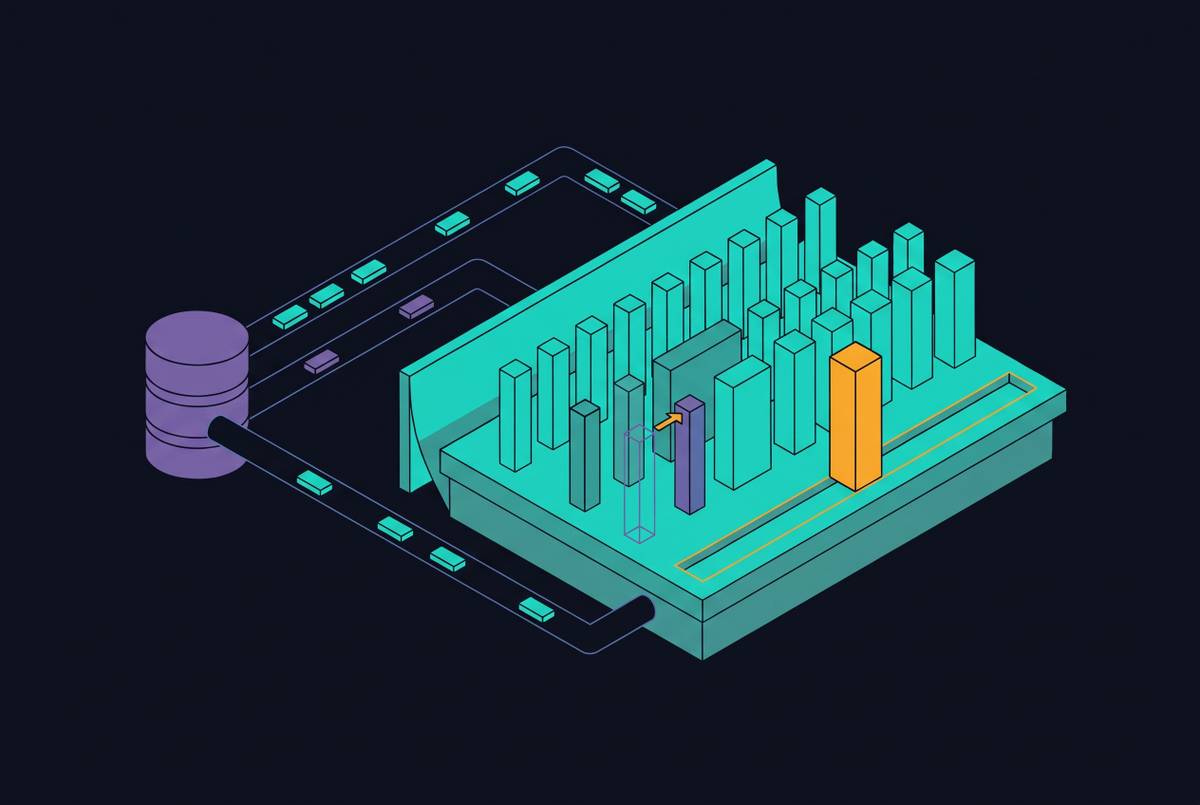
Data age and query execution time are separate delays. Even a continuously refreshed warehouse may not meet the sub-100ms context lookups required by agentic loops. A session can involve dozens of retrievals, and lookups taking seconds rather than milliseconds can accumulate into minutes of delay before concurrent load enters the picture. Fresh records alone do not make those reads fast. Replication repairs the age of the data.
Querying more frequently therefore does not resolve the mismatch. In the pull-based warehouse pattern, agents must poll because there is no event interface notifying them that a record changed. More polling cannot reveal a write that has not arrived, and it adds query work while the destination remains unchanged. The pricing model was not designed for this access pattern. Frequent retrieval can cost more while still falling short of event-driven freshness and the response times the agent needs.
How can AI agent memory stay in sync without batch delays?
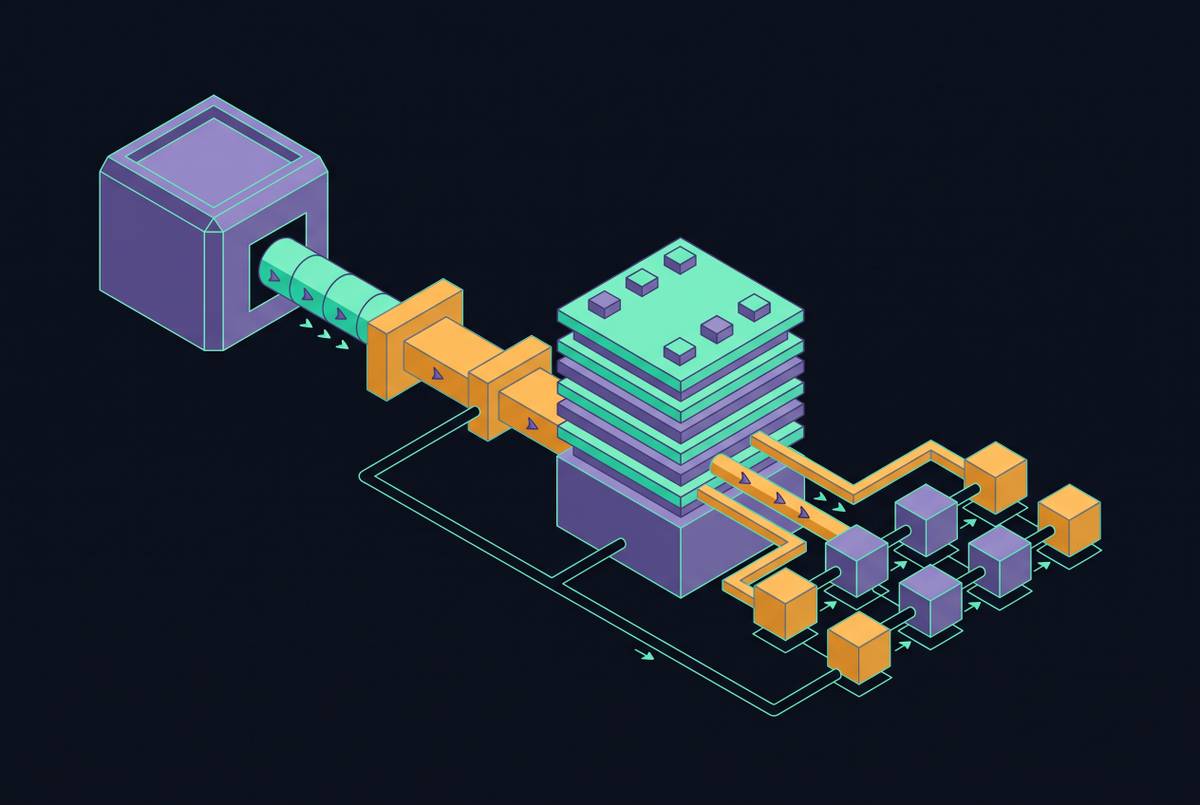
Continuous log-based replication replaces the wait for a scheduled extract with a stream of committed database changes. Rather than querying source tables repeatedly, CDC reads the database’s change log and emits row-level events, including deletes. This has minimal impact on source database performance. When a change becomes queryable before the agent’s next retrieval, the earlier inventory sequence no longer returns the pre-update stock value merely because a batch has not run.
With query-based polling, latency is measured in minutes and hard deletes cannot be captured, while trigger-based capture adds work to every write transaction. Log-based CDC has sub-second capture latency and needs no table scans or extra writes per transaction. End-to-end delivery is a separate measure. Sub-minute replication closes the batch-created gap only when it fits within the agent’s actual retrieval window.
That stream must also survive changes to the data model. A pipeline that stalls on a new column or changed type recreates the same stale interval under a different cause. Delivery semantics matter just as much because at-least-once transport can leave records that are duplicated or disagree with one another if it lacks idempotent sink updates. Continuous replication addresses the batch-created gap. It leaves warehouse query execution latency in place, and strong consistency still needs to be handled separately.
Database-specific mechanics that shape how replication behaves in practice
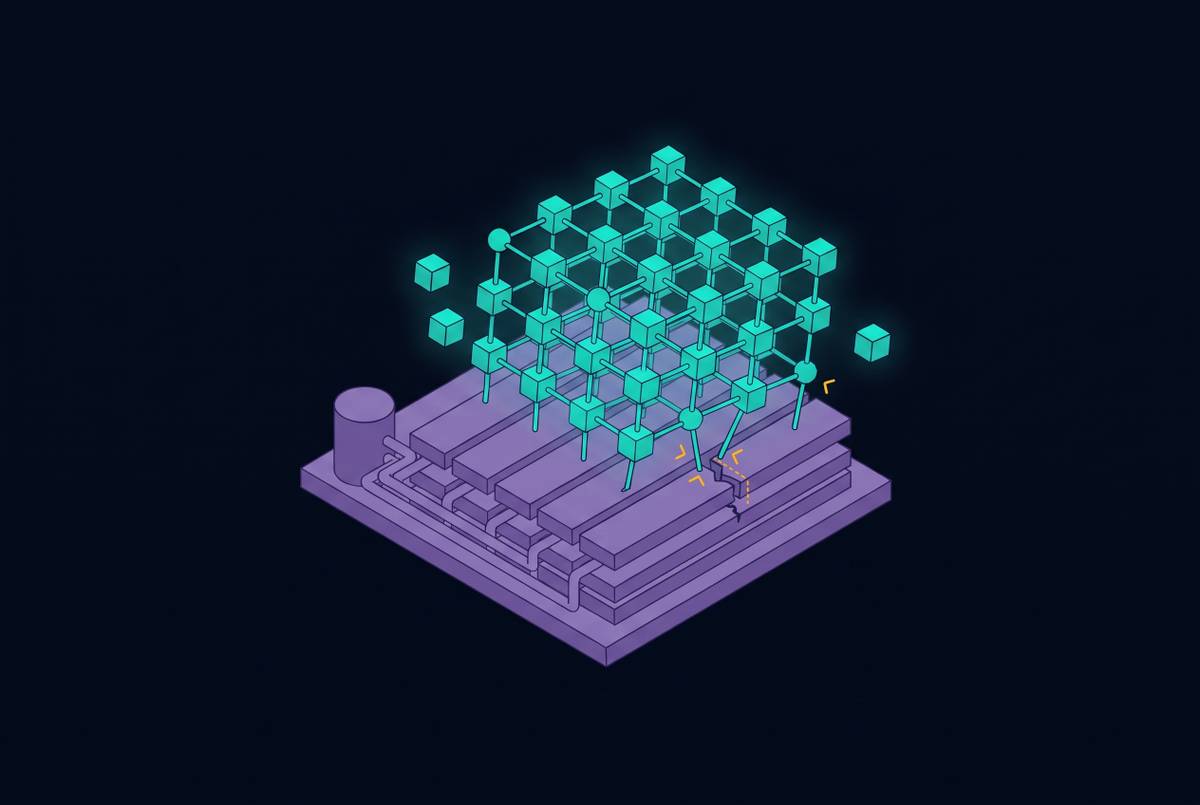
PostgreSQL uses logical decoding to turn write-ahead log entries into row-level events, streamed through a replication slot. Changes appear at commit time, so a large transaction arrives as a burst, while DDL changes require a separate schema-change process. Replication slots also retain WAL until the consumer reads it. An inactive or lagging slot with default unlimited retention can fill the volume and stop the database accepting writes. Running this in production therefore calls for a retention limit and alerts when slots are inactive.
MongoDB change streams make changes in the replica set’s operations log available to read. Parallel reads can divide large collections into manageable chunks during the initial snapshot before the live stream takes over. DynamoDB instead exposes its purpose-built DynamoDB Streams change log. Its configuration and consumer integration differ from both other sources. A generic claim of CDC support does not establish that these source-specific requirements are handled.
Across sources, the operational recommendations are to use a read replica to isolate replication load where applicable and separate backfill jobs from the live stream. Malformed or unparseable events should go to a dead-letter queue to keep delivery moving. These safeguards protect freshness during both normal ingestion and recovery.
How AWS DMS falls short when repurposed for continuous agentic replication
AWS Database Migration Service supports both migration and continuous replication. AWS’s documentation states that its CDC falls short of real-time replication, a limitation central to an agent workload. Support for ongoing synchronization is not a guarantee that an operational write will arrive before the next retrieval. DMS must therefore be assessed against the required delivery window, rather than rejected as a tool that supports migrations alone.
Schema handling also requires a qualified comparison. AWS lists dropping columns and changing column data types among the CDC DDL statements it supports, but its guidance also says that DDL may need manual steps when replication is not automatic. Complex schema changes can require reconfiguration or task restarts. When workloads stay high, memory saturation and stalls during write spikes can add more lag, and upstream schema changes can stop tasks. These risks concern continuity under the actual workload.
Sink behavior adds another engineering obligation. DMS lacks native automated merge logic for modern cloud warehouses, leaving teams to build staging and reconciliation for the required upsert semantics. The comparison with a purpose-built service consequently turns on who supplies schema handling, merge logic, and failure recovery.
What a purpose-built managed replication service provides that migration tools and DIY pipelines do not
A purpose-built managed replication service supplies continuous delivery as an operated capability rather than a collection of tasks the customer must assemble. Automatic schema evolution detects and propagates structural changes without interrupting the live stream. Idempotent upserts use primary keys and log sequence numbers to match deliveries to records through MERGE-based sink operations. The distinction is exactly-once effects at the destination despite the duplicate deliveries inherent in at-least-once CDC.
Sub-minute end-to-end delivery to destinations including Snowflake, BigQuery, Redshift, Databricks, and ClickHouse establishes the baseline freshness target. The service must meet that target during backfills and failures as well as when traffic is steady. With built-in slot lag monitoring, dead-letter queues, and backfill isolation, the service layer takes on those jobs. Security is another selection criterion. A passthrough design that does not store change events in vendor infrastructure addresses data-residency concerns for teams operating under HIPAA, SOC 2, or other compliance requirements.
Some guarantees arrive with the service, while others still depend on customer-built infrastructure.
Matching replication consistency to what each agentic task actually requires
AWS’s analysis distinguishes three patterns by the task’s truth requirement. Strong global consistency fits financial ledgers, user permissions, and security policies where stale reads are unacceptable. Multi-leader replication with conditional writes fits conversational history and session state where concurrent agent updates need race-condition protection without synchronous global coordination. High-velocity intake works for real-time anomaly detection or trend analysis when streams move fast. These patterns differ in write coordination and share a need for fresh inputs.
The practical framework begins with the consequence of the write. Tasks that commit consequential decisions require the strongest consistency guarantees, while read-only context retrieval benefits from sub-minute freshness without necessarily needing synchronous write coordination. For most customer context, inventory, support status, and fraud-signal retrievals, sub-minute replication closes the practical batch gap. It remains an asynchronous delivery target, however. A task that cannot tolerate a stale read needs more than a latency objective.
How to evaluate whether your current pipeline delivers the freshness agentic workloads require
A team evaluating its pipeline should measure write-to-queryable lag. The relevant duration starts with the operational write and ends when that write can be retrieved from the warehouse. Job runtime, retries, and schema-change stalls all extend it. A schedule is not a freshness measurement. The result should be compared with the retrieval window of the agent task it serves.
The next step is to map consequential retrievals to the records they read and identify what can change during a typical lag interval. Approvals, orders, routing, and flags need a close look because their outputs lead to real-world actions. Teams also need to test concurrent query performance with the agent load they expect. Analyst query performance is not a substitute. A freshness target is useful only if retrieval execution also fits the decision loop.
Finally, the assessment should examine schema changes from the last quarter and the manual intervention they required. When repairs are needed again and again, freshness depends on the source model staying the same, and the pipeline cannot cope with changes on its own. Where batch delivery falls outside the required window, managed continuous log-based replication with schema evolution and exactly-once sink effects is the architectural change supported by that diagnosis. The acceptance test is whether the operational change is queryable before the decision that depends on it.