Why Your Warehouse Replication Layer Is the Wrong Foundation for LLM Application Memory
Building LLM agents requires live operational data, not batch-processed warehouse snapshots.
Real-time CDC replication for AI agent memory and feature stores requires a live data tier fed directly from operational databases. That tier must combine fast retrieval with current facts, per-fact revocation, and reliable change delivery. The warehouse replication layer is the wrong foundation because it serves a different freshness contract, namely analytical access to settled data rather than operational access to facts that remain valid now.
What LLM application memory actually requires from a data layer
LLMs are stateless between invocations, so an agent that appears to remember is reading from an external store at query time. That store must keep knowledge across sessions and keep each fact tied to the identity it belongs to. Retrieval must also stay within a sub-second latency budget at P99 as well as on average. Speed alone does not satisfy the contract. A rapidly retrieved fact can still be obsolete, misassigned, or no longer permitted for use.
For that reason, memory requires row-level invalidation when a fact changes or expires. Configurable expiry windows must also prevent old findings from suppressing legitimate re-evaluation. Temporal reasoning, cross-session identity, privacy, and deletion all constrain which stored facts an agent may use. Recall is only part of the requirement. An operative memory store must distinguish information worth retaining from information that remains valid for the current request.
Why the warehouse replication layer was built for a different freshness contract
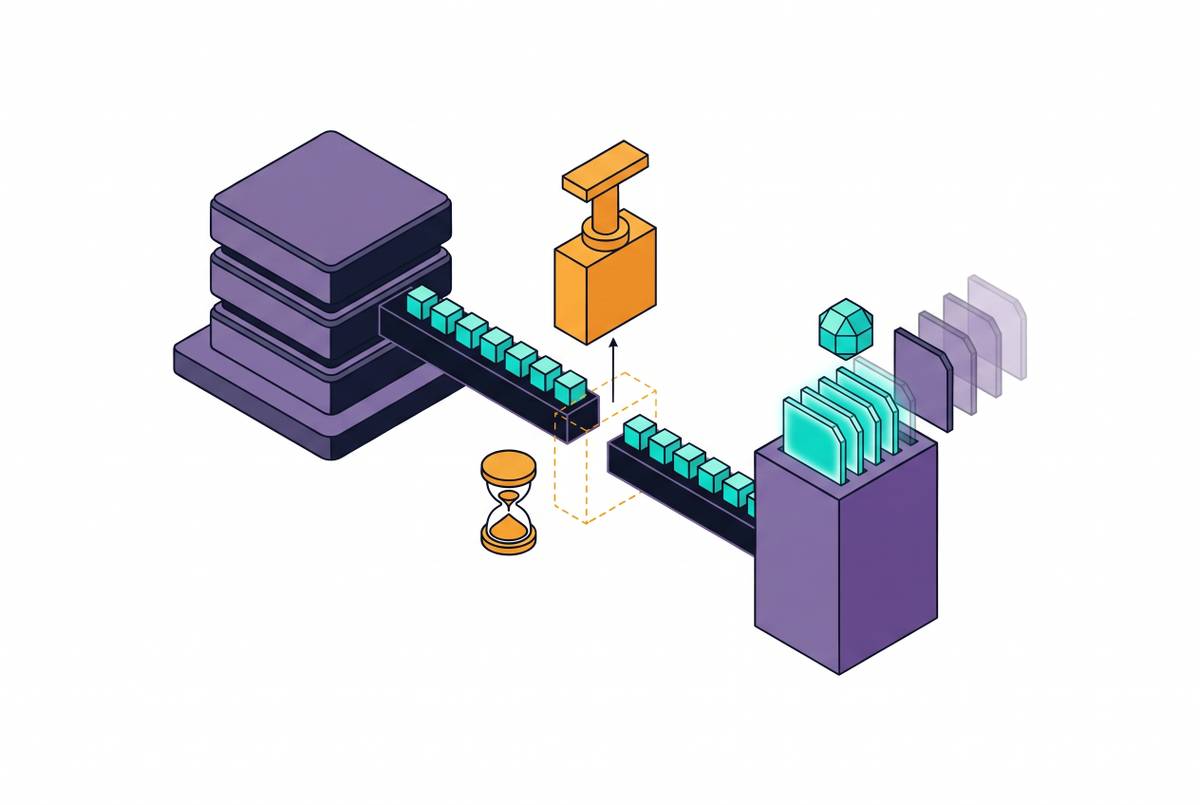
A scheduled batch pipeline processes the changes that built up since its last run. An hour of delay before processing begins can therefore be intended behavior. The schedule defines the freshness contract in advance. That contract suits analytical queries over settled data, where the destination is a read-optimized copy. Its purpose is not to invalidate an individual fact the moment an agent must stop using it.
CDC changes the capture model from asking what a table looks like on a schedule to asking what just changed. It can shrink warehouse staleness from hours to seconds in the best case, but the destination still serves an analytical workload. The warehouse replication layer does not itself supply the memory-specific contract of row-level expiry, invalidation metadata, and temporal validity windows. A latest-known record is not equivalent to a fact whose validity interval is explicit.
The mismatch is architectural. Routing memory retrieval through that layer asks a system built to provide a settled analytical view to guarantee that every returned fact is currently operative and immediately revocable.
How CDC methods introduce latency and gaps before data reaches any downstream store
Query-based CDC polls the source at intervals, so it cannot see changes until the next query. A deleted row leaves nothing to query. This method therefore misses deletes. After downtime, polling captures the record’s latest state but loses the changes made along the way. Trigger-based CDC has a different cost profile. Its capture work executes within source write transactions, adding write latency, while periodic reads from a shadow table introduce a further polling delay.
Log-based CDC reads the transaction log asynchronously, captures deletes, and keeps capture off the write path. Changes held only in volatile memory can disappear in a crash before they reach disk. Offset gaps can omit data, while re-consuming an already processed offset can duplicate it. In PostgreSQL, an inactive replication slot can also pin WAL and fill disk, and replication conflicts require manual handling.
PostgreSQL log-based CDC has at-least-once delivery, which falls short of exactly-once delivery. Although a subscriber can know which transaction to resume after a restart, duplication remains possible without additional deduplication logic. These risks precede the downstream store’s own behavior. Capture delay, recovery gaps, and warehouse query latency accumulate along the retrieval path, so a fast destination cannot by itself establish an end-to-end freshness guarantee.
How schema evolution silently breaks the pipeline between operational databases and downstream stores
Schema changes can make a pipeline’s output incomplete even while the pipeline looks healthy. PostgreSQL logical replication does not automatically propagate DDL to subscribers. When a publisher gains a column, the corresponding subscriber schema must be updated before affected replication can continue. PostgreSQL 18, released in September 2025, added replication of stored generated column values, but it did not introduce automatic DDL replication. That improvement does not synchronize schema definitions across the downstream chain.
AWS DMS can exhibit a less visible failure. In some configurations, tasks continue running successfully while dropping new fields without alerts or validation failures. The service also has no schema history or version tracking. For agent memory, a missing field is not merely an anomaly awaiting a dashboard review. The agent can act on an incomplete record with false confidence because the retrieval layer does not signal what was omitted.
Coordinate migrations across the entire path from the operational source to the memory store. Automatic schema evolution must pick up and apply changes without losing data silently. Task health is not enough to establish correctness. A production memory pipeline must preserve the meaning and completeness of the facts it delivers as their source schema changes.
What AWS DMS's latency characteristics reveal about CDC tools built for load, not streaming
AWS DMS illustrates the difference between migration-oriented replication and a live memory delivery contract. AWS documentation explicitly states that its CDC does not provide real-time replication and has no CDC latency SLA. Latency can increase to several minutes or longer. Those characteristics can be compatible with initial full loads and basic ongoing replication, but they cannot establish the bounded freshness that agent memory requires.
By default, DMS uses a single writer thread to apply change events, whatever the load. Under high-concurrency source write spikes, target commit latency can compound, pushing lag from seconds to multiple hours and exhausting replication instance swap memory. Recovery introduces another constraint on the delivery contract. DMS has no built-in dead letter queue or stateful retry queue, and failed events cannot be re-ingested without resuming or restarting the task or adding external tooling to monitor log gaps.
These are distinctions in intended use. A migration workload and a continuously queried memory store tolerate different delays and recovery procedures. For the latter, the relevant selection criteria include latency guarantees, failure recovery, schema handling, and delivery semantics. Support for CDC alone does not settle suitability.
The staleness and revocation problem that emerges when agents read from warehouse-tier data
An agent can retrieve exactly what its memory store contains and still produce an invalid answer. If the source fact changed but the memory copy did not, retrieval accuracy simply reproduces stale context. Revocation therefore depends on data currency. The same issue applies when a vector embedding remains available after the operational fact it represents has changed. Without temporal awareness, historical correctness can be mistaken for present validity.
The Air Canada chatbot case provides a concrete consequence of relying on incorrect agent-delivered information. In February 2024, a British Columbia tribunal held the airline liable for negligent misrepresentation after its chatbot quoted a policy that never existed. The tribunal treated information delivered through a chatbot no differently from information on a static page. This establishes that an organization remains responsible for information its agent supplies.
A stale-memory architecture creates a related exposure when an agent continues acting on a revoked fact. The warehouse replication layer does not supply a validity window or invalidation event merely by maintaining the latest analytical copy. Correcting the source is therefore insufficient on its own. The downstream memory must stop presenting the superseded fact as usable context.
What an operationally live data tier beneath the agent actually looks like
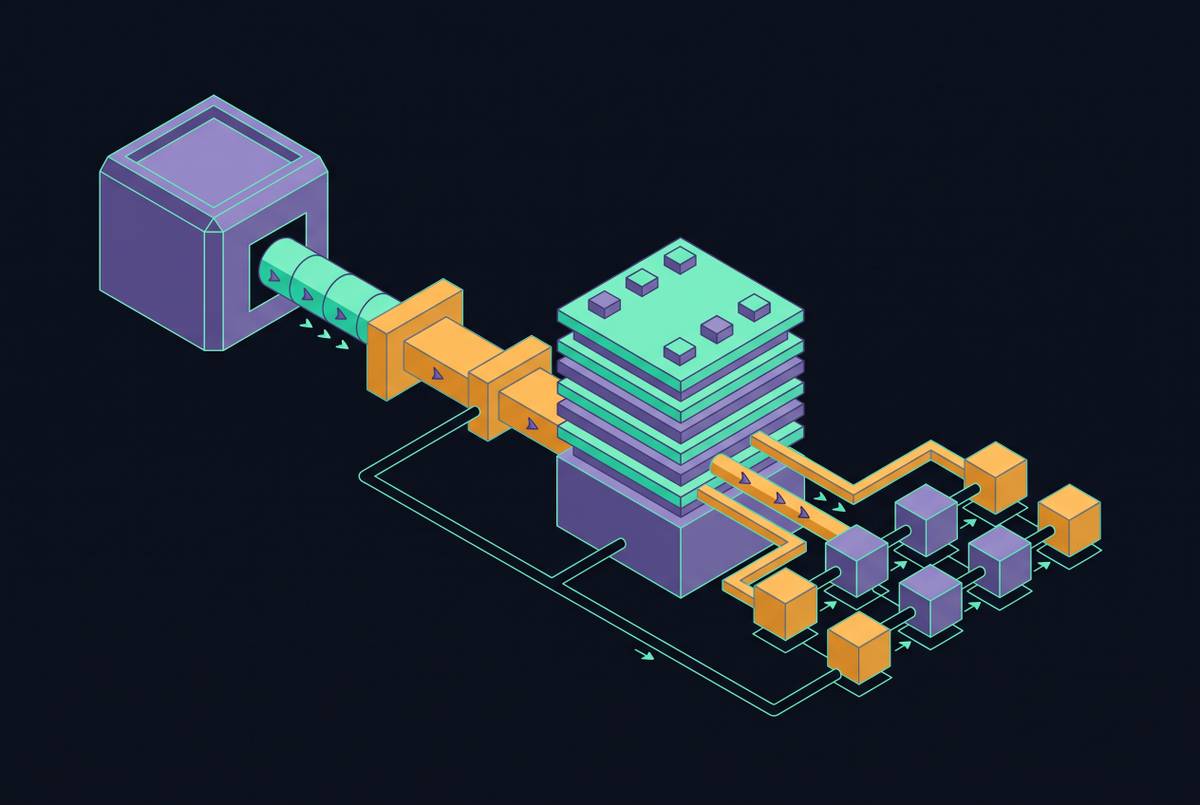
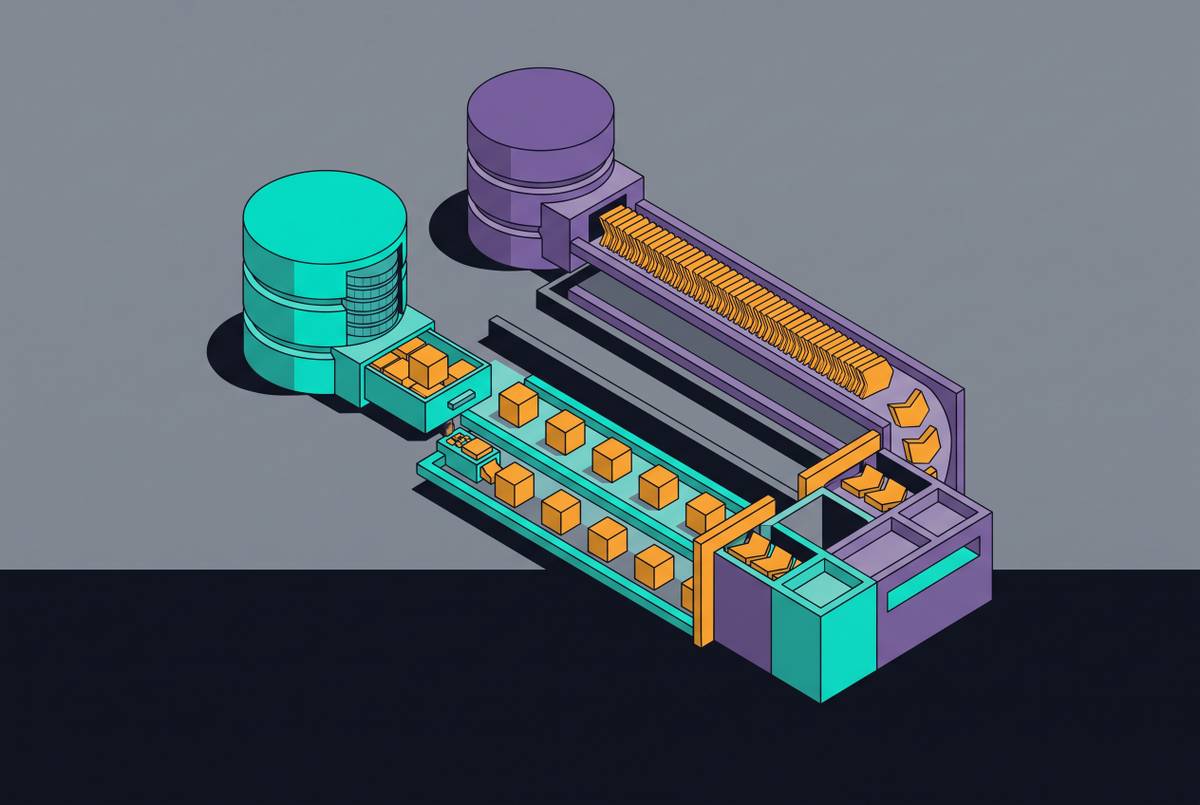
The architectural response is a dedicated memory tier fed directly by log-based CDC from the operational database. Changes flow continuously rather than waiting for scheduled jobs or polling intervals. The warehouse remains a downstream analytical consumer of the same change pipeline, outside the agent’s primary retrieval path.
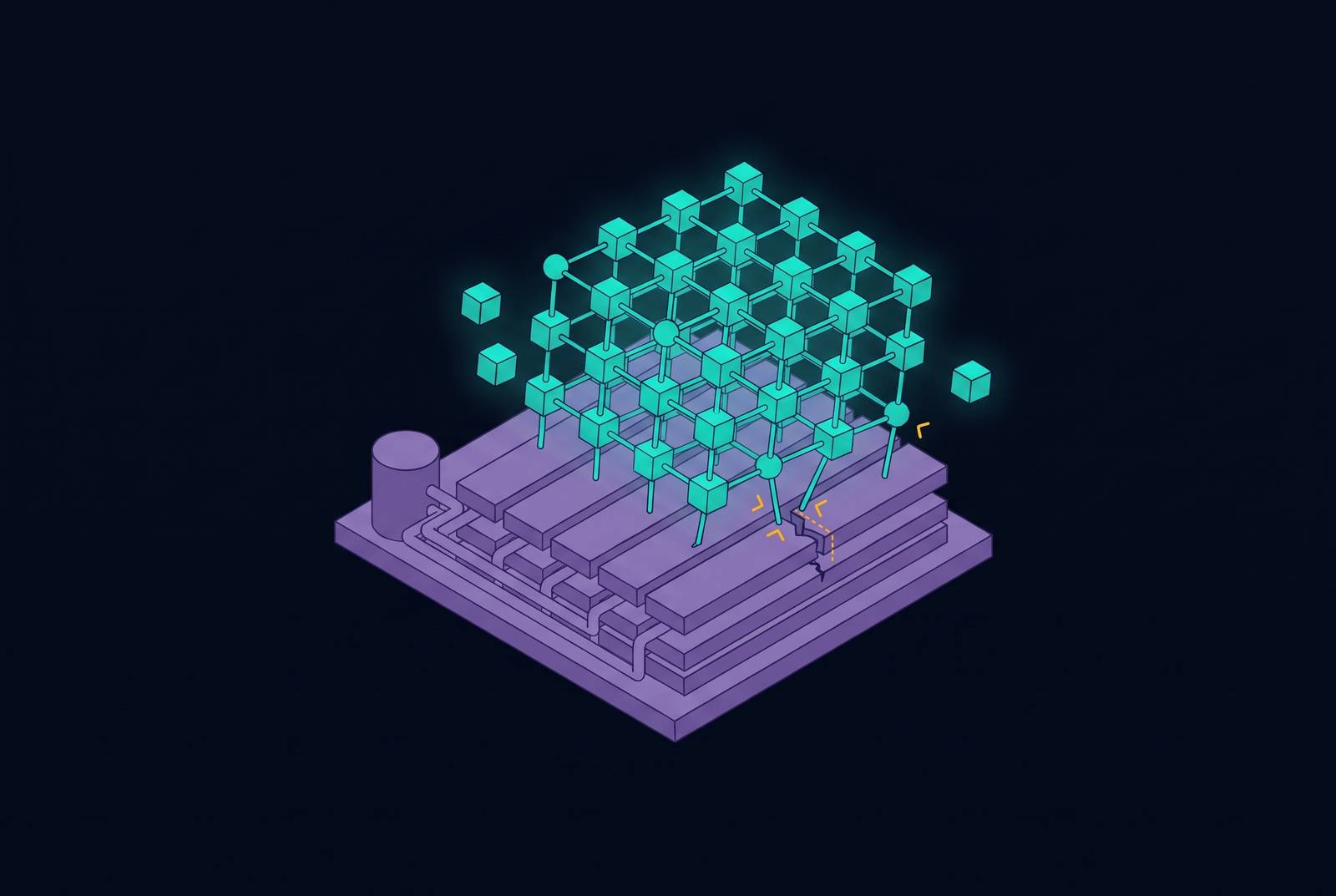
The live tier must also represent time explicitly. Validity windows identify when a fact became true and when it was superseded, allowing retrieval to distinguish current information from historically accurate information. Zep’s Graphiti architecture, described in the 2026 material, implements this pattern through valid_at and invalid_at metadata for temporal correctness and historical invalidation. Hydra DB, in its 2026 academic context, combines a Sliding Window Inference Pipeline with a version-control-style versioned contextual knowledge graph to address semantic fragmentation and temporal stagnation in long-horizon RAG deployments.
Delivery correctness belongs in this design as well. Exactly-once semantics and automatic schema evolution are prerequisites for avoiding duplicate events and silently missing fields in the live tier. Those properties do not follow automatically from reading a transaction log. A managed CDC service that handles schema evolution, failure recovery, and exactly-once semantics can feed both destinations and meet the different contracts they have.
How do teams keep agent memory in sync with production databases without batch delays?
PostgreSQL logical replication captures row-level operations, such as an INSERT with specific column values. This keeps the live tier aligned with the meaning of source operations. Schema synchronization remains a separate implementation obligation. As established above, PostgreSQL 18 does not add automatic DDL replication, so schema changes must still be applied manually to each subscriber unless the surrounding pipeline handles them. Agent-memory delivery must account for both that limitation and at-least-once capture semantics.
MongoDB change streams provide a native change feed for caches and downstream consumers without an additional log-parsing layer. They are tightly coupled to the MongoDB protocol, making them well-suited to MongoDB-aware consumers in the live tier. The implementation boundary differs from PostgreSQL’s subscriber model.
DynamoDB Streams provide a direct feed into the live tier for teams building memory on DynamoDB. Amazon DynamoDB Global Tables replicate changes across regions, usually within a second or less, so applications can stay writable across regions. That timing describes regional replication. The stream-to-memory path must still meet the retrieval and revocation contract of the application consuming it.
For these databases, the pattern calls for log-based change capture. It captures deletes, preserves intermediate changes that polling can miss, and keeps capture off the source write path. Database-native replication is only the starting point here. The destination must still enforce temporal validity and invalidation for the facts that agents retrieve.
The compliance and security obligations that apply specifically to the live memory tier
A continuously updated memory store holds current operational facts, so treating it as a lightweight cache understates its governance obligations. For B2B deployments, technical buyers must spell out the scope of multi-tenant and sub-tenant isolation. Cross-tenant retrieval breaks compliance rules as well as returning data that is not relevant. Before sensitive data enters a third-party memory or replication layer, buyers should assess the required SOC 2 Type 2 assurance, HIPAA compliance, Bring Your Own Cloud capabilities, or air-gapped deployment options.
Product assurances must be matched to deployment terms. Graphiti’s managed cloud offering has SOC 2 Type 2 certification, while a HIPAA BAA is available on the Enterprise plan only. Pipelines that handle PHI or PII must have encryption in transit, key management, and audit logging as a baseline. Replication infrastructure should serve as a passthrough. Buffering or persisting customer data in the replication service’s own storage adds another compliance surface beyond the memory destination.
A user deletion request must be able to trigger deletion or invalidation of the specific fact in memory under applicable data privacy obligations. A later refresh of an analytical copy does not satisfy that operational requirement. The agent crosses that boundary if it can still use a fact after permission to keep or use it has ended. That boundary makes live, per-fact revocation a legal obligation as well as an architectural requirement.